Top reads for 2025
In no particular order, these are some of my favorite books that I read in 2025.
~ ~ ~
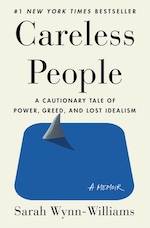
Similar to one of my top reads from last year (Exit Interview, by Kristi Coulter), this memoir is an expose of a technology company that has grown to have an unbelievable amount of influence and control in the world, Meta (known more prominently as Facebook).
“But most days, working on policy at Facebook was way less like enacting a chapter from Machiavelli and way more like watching a bunch of fourteen-year-olds who’ve been given superpowers and an ungodly amount of money, as they jet around the world to figure out what power has bought and brought them.”
In Careless People: A Cautionary Tale of Power, Greed, and Lost Idealism, Sarah Wynn-Williams provides us with a scintillating peek into the culture and machinery that makes up the behemoth of Facebook.
- Narcissistic, greedy founder who always thinks they’re right and surrounds themselves with enablers. Check.
- Senior executives who are selfish and greedy, and know how to ride the founder’s coattails to extreme wealth and power. Check.
- Managers and executives who routinely leverage their power over employees in ways that are not only uncomfortable, but most likely illegal (breaking labor laws, sexual harassment, etc.). Check.
- Espousing a company culture and mission that draws in people who want to improve the world, but it’s really all about the money and when the two conflict, the money always wins. Check.
- Silencing anyone who speaks out internally. Check.
The situations the author finds herself in, day after day, year after year, during her 10 year tenure are absolutely absurd. While I read it with more than a little skepticism, I appreciate that she sincerely acknowledges her naivete—and unexpected complicity—along the way. She describes the experiences and her reactions with self-awareness, sometimes admitting that she didn’t understand why she continued with the company after such horrible treatment. I’m sure the comfortable salary, top-notch benefits, jet-setting around the world, and hobnobbing with celebrities all contributed. Regardless, I’m glad that she took the time to share her story with the world.
Reading this was like watching a train crash, I just couldn’t look away.
~ ~ ~

Redshirts, by John Scalzi, is a clever and fun ode to those poor saps on the original Star Trek who wore red uniforms and never seemed to survive the away missions.
~ ~ ~
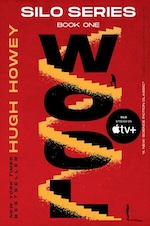
I first read the Silo series, by Hugh Howey, in 2017 and thoroughly enjoyed it. After watching the excellent series adaptation on Apple TV, my wife wanted to read the books and I joined her for a reread. Not only were they fun to read again, but it was interesting to see the differences between the books and the TV series. I’m not a purist when it comes to translating books into visual media; I like to give the artists (actors, directors, writers, etc.) the freedom to interpret the original work into their own. There are two questions I ask myself in these situations: did I enjoy it and did they remain true to the spirit of the original. In this case, we did and they most certainly have.
The first book in the Silo trilogy, Wool puts the reader in a dystopian society that is unique to others in the genre. Howey throws you right into the story with a fair mix of action, drama, and no shortage of suspense. The characters have their personality traits, yet grow as the plot unfolds. An enjoyable, suspenseful, interesting read with plenty of plot twists.
The second book in the Silo trilogy tells the story of how it all began. How Silo came about in the first place and who were the architects, both willing and not. I appreciate that Howey told us how it all started, something we’re often left wondering (I’m looking at you, Walking Dead). Once again, the story unfolds with well-written action, drama, and suspense. My only criticism is that shifting between the timeframes became tedious, forcing me to mark the chapters (where time changed) to keep track which one I was currently reading.
The third book in the Silo trilogy delivers the same high-quality storytelling as the previous installments. Action, drama, suspense, and character development…all present and well-written. Thank you, Howey, for giving the readers an ending to the story arc.
~ ~ ~
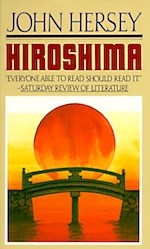
Before our trip to the city of Hiroshima in Japan, I wanted to learn more about the atomic bomb that was dropped by the United States military during World War II, on August 6, 1945. There are numerous books about the Manhattan Project, Enola Gay, the military strategies and such, but I wanted to understand how it impacted the Japanese people from an empathetic perspective. Hiroshima, by John Hersey, provided exactly that with the powerful stories of six people, innocent civilians whose lives were forever changed.
The book is well written and presents the survivor’s true experiences in the story-telling manner of a fictional work, pulling the reader in and keeping them engaged. It was an emotional read, often a difficult one given the horrors they experienced, yet such an important perspective in understanding how the decision impacted hundreds of thousands of people, mostly civilians. Having read this, it made our visit to the Hiroshima Peace Memorial Park and Hiroshima Peace Memorial Museum so much more impactful to me, personally.
A year after the bombings in Hiroshima and Nagasaki, Japan was still under U.S. military control and information about the devastating aftermath was highly restricted. Propaganda in the U.S. reported minimal deaths and minor health issues for some survivors, but the reality was starkly different. There were an estimated 90,000 to 166,000 dead by the end of the year and tens of thousands of survivors living with the effects of radiation poisoning for the remainder of their lives.
The real impact of the horrific event was revealed by John Hersey, a reporter who traveled to the demolished city and interviewed six survivors a year afterwards. The book was initially published in The New Yorker in 1946, when the editors chose to forgo their usual format and devote the complete issue to Hersey’s four articles—they were published as a book less than two months later. In 1985, forty years later, Hersey tracked down the original six survivors and interviewed them again, discovering how their lives had gone since. Those stories comprise the fifth chapter, “The Aftermath”, that was added to the book in later editions.
~ ~ ~
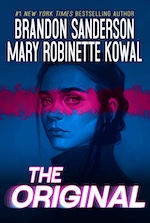
Oddly enough, The Original is the first Brandon Sanderson work I’ve read, outside of his wrap up to the Wheel of Time, and it’s primarily because he teamed up with one of my favorite authors, Mary Robinette Kowal. The concept behind the novella is clever and intriguing, and the story had me hooked from the beginning. Plus, at 112 pages, it’s a quick, enjoyable read and well worth the minimal time investment.
~ ~ ~
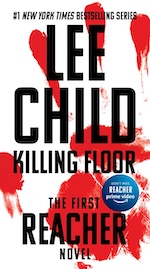
Jack Reacher: Killing Floor, by Lee Child, has been on my to be read (TBR) list for several years. Enjoying four seasons of the TV series on Amazon prompted me to finally read this and it didn’t disappoint! The story is fast-paced and full of Reacher’s solemn yet muscle-filled servings of justice to the bad dudes, with a few dollops of whodunit mystery thrown in for good measure. Regarding the translation of book to video, I’m glad that I watched the series ahead of time because I visualized Alan Richardson as Reacher, which made it even more engaging. I’m looking forward to continuing the series (holy crap, over 30 books)!
~ ~ ~
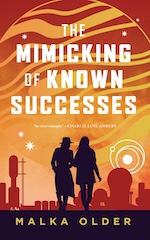
I don’t recall how The Investigations of Mossa and Pleiti series, by Malka Older, came to my awareness, but I’m glad for it. These mystery novellas set hundreds of years in the future on Jupiter are delightful! The odd couple pairing of Mossa and Pleiti is interesting and funny while delving into each one’s introspective and self-reflective moments, and lack thereof in certain instances. The mysteries are curious, engaging, and complex enough to keep me guessing. When science fiction looks into the future, it’s always hit-or-miss as to whether or not it resonates with today’s world. Sadly, Older’s vision aligns with the current state of the world and its general apathy and greedy malevolence towards the environment. Despite the gloomy evolution of Earth, the stories are wonderful.
- The Investigations of Mossa and Pleiti (Book 1): The Mimicking of Known Successes
- The Investigations of Mossa and Pleiti (Book 2): The Imposition of Unnecessary Obstacles
- The Investigations of Mossa and Pleiti (Book 3): The Potency of Ungovernable Impulses
~ ~ ~
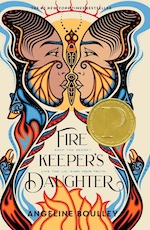
Firekeeper’s Daughter, by Angeline Boulley, is not a book I would have selected on my own, but I’m grateful to have read it and it’s one of the more powerful and engaging books I’ve read this year—big thanks to our book club for selecting it.
While it starts a bit slow building the environment and establishing the characters, once it gets going (chapter 10ish) things move along at a solid pace. The mysteries continue to grow, evolve, and take unusual turns, with several clues that I was able to see in retrospect. The main character, Daunis, is interesting and intelligent, yet struggles with insecurities and self-doubt, as so many of us do. She’s relatable, especially as an almost 19-year-old woman who finds herself dealing with an extreme situation.
I truly enjoyed being immersed in the Ojibwe culture and language. The author explains practices, events, and the language in ways that are instructive and interesting without bogging down the story. I appreciate how Boulley doesn’t shy away from the themes of racism, sexual assault, honoring culture and traditions, and how much they impact indigenous peoples in the U.S. and Canada. It stand on its own as a mystery novel and the author elevates the story by immersing us in the Ojibwe culture.
~ ~ ~